



Evolving Global Demand for Italian Cheese and the Impact of Milk Price Dynamics
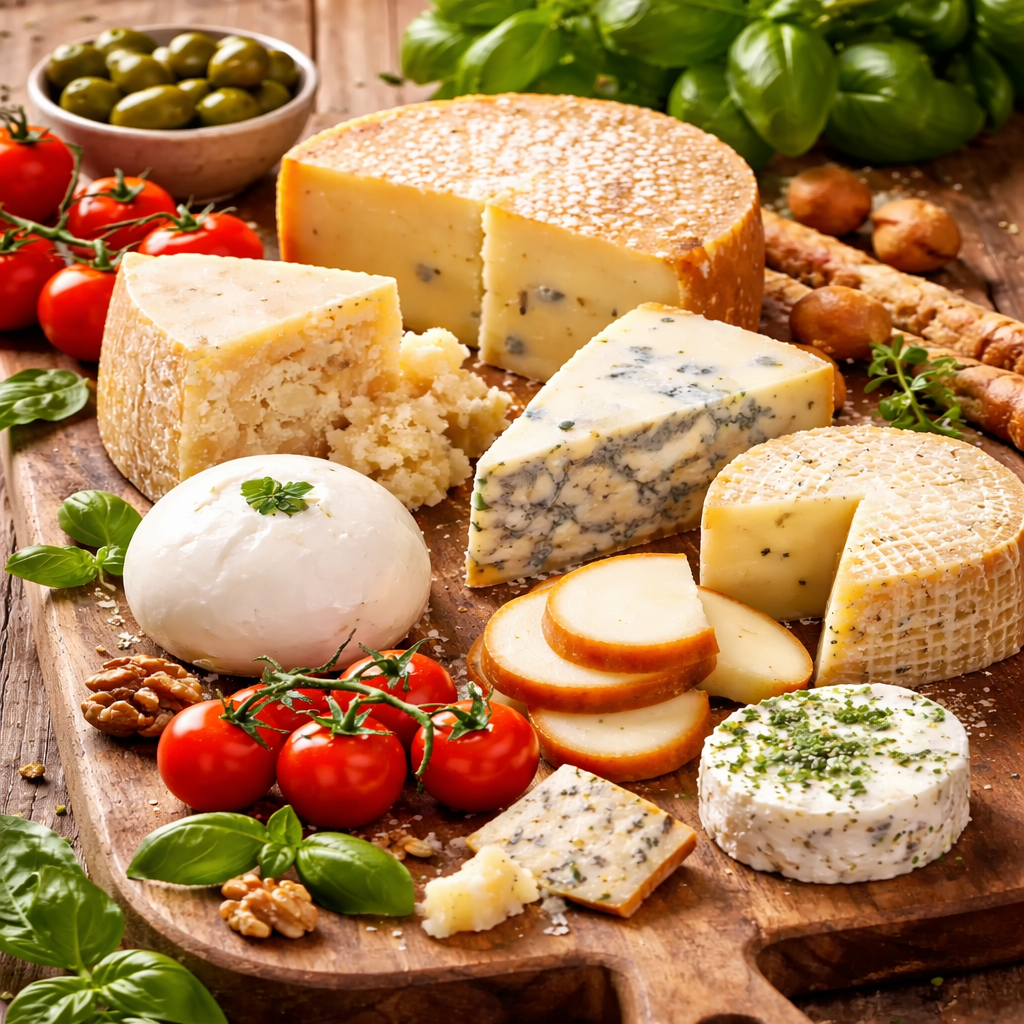
Global demand for Italian cheese remains strong and continues to evolve in structure.
Recent trade data shows that Italy has consolidated its role as a leading exporter of cheese in 2025, outpacing traditional competitors in key metrics. According to European Commission figures, Italy exported 97,663 tonnes of cheese valued at €968.2 million in the first half of 2025, marking a 5 % year-on-year increase and positioning it as the top EU exporter by volume.
Growth of Italian cheese exports was particularly pronounced in non-EU destinations such as South Korea, Saudi Arabia and Canada. This performance confirms sustained international appetite for Italian dairy products and reflects structural demand across diverse channels, including retail, foodservice, and industrial processing.
Structural changes in B2B and foodservice cheese demand. For buyers and importers, B2B cheese sourcing means evaluating the Italian offering not solely on origin appeal, but on technical performance criteria such as:
- consistency of supply,
- standardized specifications,
- integration into professional workflows.
An important component of this demand landscape is the segmentation of Italian cheese exports.
While traditional PDO cheeses continue to command premium positioning, there is a clear rise in interest for formats engineered for industrial usage and foodservice applications, such as portioned, grated, or pre-processed cheeses with extended shelf life and predictable behaviour under processing conditions. This shift aligns with operational priorities in modern kitchens and production lines, where predictable yield and logistical efficiency drive procurement decisions.
Conversely, production cost pressures (particularly farm-gate milk price fluctuations and milk price dynamics) have become a defining factor in the economics of cheese production. For much of 2025, milk prices at farm level had remained relatively elevated compared with earlier years, supported by strong demand for PDO products such as Grana Padano and Parmigiano Reggiano. However, in the last two months of 2025 the spot price of milk has dropped significantly, with Italian milk spot quotations falling to some of the lowest levels in recent years (around €0.425–€0.4575 per kg in northern Italy markets in November) after a period of higher prices earlier in the year.
This decline reflects growing milk output and changing market dynamics in the EU dairy sector, where increased supply and inventory pressures are weighing on commodity prices.
Because milk is the principal input for cheese production, a sustained fall in its price could translate into mild downward pressure on cheese prices, especially for fresh and less-aged categories whose cost structure is more directly tied to current milk costs. Fresh cheeses and fluid milk derivatives are typically more sensitive to recent spot price movements than long-matured PDO cheeses, whose pricing is influenced by aging, brand value, and longer supply contracts.
Outlook for 2026 and strategic considerations
Industry discussions and market commentary suggest a potential stabilization or mild price recovery beginning in March 2026, but much will depend on domestic consumption trends and the strength of foreign demand, particularly in markets where Italian cheese has strong penetration. If consumption does not strengthen as expected or export orders soften, downward pressure on cheese prices could persist.
Producers are increasingly focusing on portfolio optimization, cost management, and technological innovation to preserve margins while maintaining quality benchmarks. For international buyers and importers, these dynamics influence procurement strategy, with a greater emphasis on:
- long-term sourcing agreements,
- transparent pricing mechanisms,
- partners capable of mitigating volatility through diversified supply bases and contractual risk sharing.
Aligning with suppliers that offer predictable technical specifications, robust traceability, and compliance with regulatory standards helps reduce risk in import operations and supports continuity across retail and professional channels.
The interaction between mounting export demand and the cost pressures of milk supply underscores a complex but opportunity-rich environment. Buyers who integrate insight into milk price trends and their downstream effects on production costs are better positioned to forecast pricing, manage inventory risk, and negotiate terms that balance quality with economic sustainability.
In summary, the global market for Italian cheese in 2025 demonstrates both expanding demand and increasing sophistication. For B2B buyers and importers, success depends on choosing partners that combine technical expertise, supply reliability, and market-oriented product development. In doing so, they can leverage Italy’s strong export performance while maintaining operational resilience in the face of price dynamics and global supply chain complexity.
Sources:
Latte News – Aggiornamento mercati
Agen Food – Il settore lattiero caseario italiano tra record dop e calo del latte fresco