


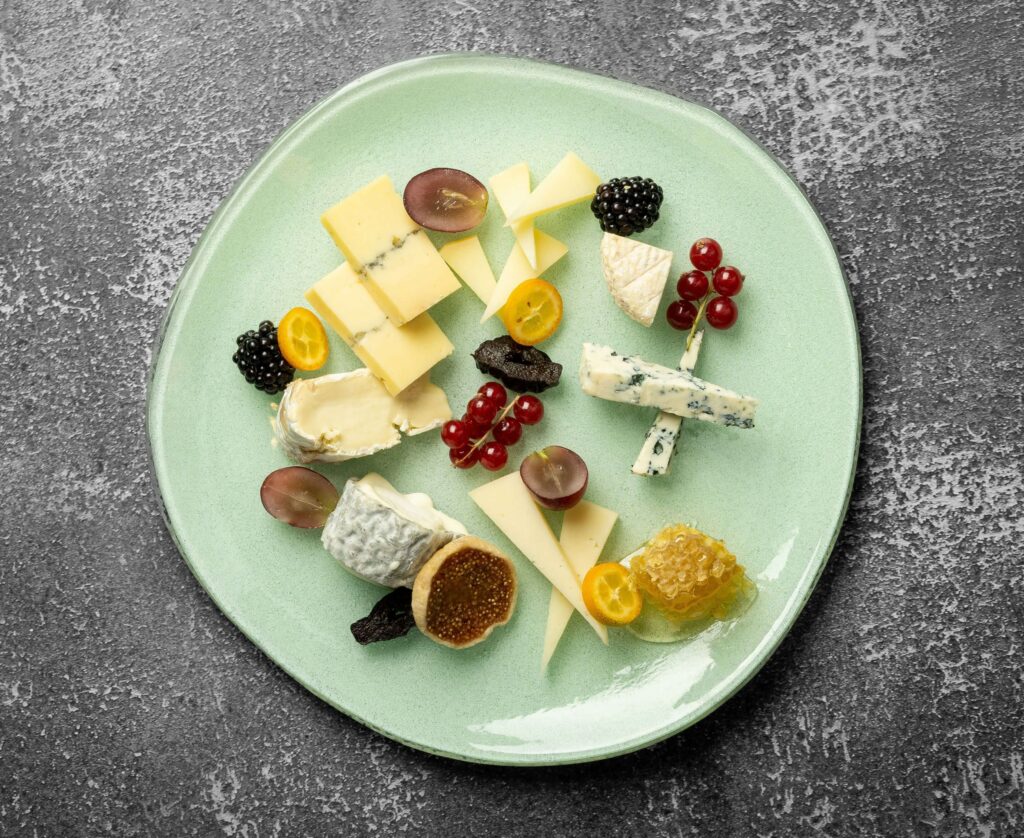
As November arrives and temperatures begin to drop, food preferences naturally shift towards warmer, richer dishes. Melted cheese, oven-baked preparations, hearty sandwiches and seasonal menus create new opportunities for Italian cheese in both retail and food service.
For international importers, this is a good moment to look beyond the best-known Italian staples and consider how to build a more varied cheese portfolio. The key is not simply to offer more products, but to combine different textures, flavour profiles and uses: from mild and creamy cheeses to more mature, savoury varieties, including Italy’s distinctive blue cheeses.
Gorgonzola: Italy’s Iconic Blue Cheese
A strong Italian cheese selection can hardly overlook Gorgonzola. One of the country’s most recognisable blue cheeses, it offers an interesting range of possibilities thanks to its two main varieties. Gorgonzola Dolce is creamy, delicate and approachable, while Gorgonzola Piccante has a firmer texture and a more intense, complex flavour.
This distinction is worth highlighting when presenting the product to buyers. Dolce is particularly suited to creamy sauces, risottos and warm fillings, while Piccante can bring a stronger character to gourmet burgers, savoury pastries and cheese boards. Together, they offer two distinct ways to introduce Italian blue cheese to consumers, from those who prefer milder flavours to more adventurous cheese lovers.
Asiago Cheese and Fontina Cheese: Versatile Choices for Food Service
A balanced portfolio should also include cheeses that can easily move between everyday consumption and food service applications.
Asiago PDO is a good example. Available in fresh and aged versions, Asiago cheese ranges from a mild, milky flavour to a more pronounced and savoury profile. Asiago Fresco works particularly well in sandwiches and panini, while aged Asiago can be offered as a table cheese, shaved over hot dishes or used to add depth to seasonal preparations.
Fontina PDO brings a different kind of value. This traditional Fontina cheese from the Aosta Valley has a supple texture, rich flavour and excellent melting properties, making it a natural choice for autumn and winter menus. From toasted sandwiches to baked dishes and gourmet burgers, it offers food service operators an authentic Italian ingredient with both flavour and functionality.
Robiola Cheese: A Softer Addition to Your Portfolio
Not every cheese needs to be bold or mature. Including softer varieties helps create a portfolio with a wider range of textures and consumption occasions.
Robiola cheese, a family of soft cheeses from Northern Italy, is particularly interesting for its creamy consistency and delicate flavour, although its profile varies according to the type of milk and maturation. It can find its place on premium cheese counters, in appetisers, spreads and gourmet sandwiches, appealing to consumers looking for something different from the more familiar Italian varieties.
Smoked Provola: An Italian Cheese for Hot Dishes
Smoked Provola adds a distinctive note to the selection. Its stretched-curd texture, delicate smoky aroma and good melting performance make it a practical choice for hot sandwiches, burgers, baked dishes and casual dining.
For importers, smoked Provola is also an interesting way to introduce consumers to a less familiar side of Italian cheesemaking through an accessible and versatile product. Its potential extends beyond the cheese counter, offering food service operators an ingredient that can add a recognisable smoky note to familiar dishes.
A Portfolio Designed Around More Than the Cheese Counter
Building a successful Italian cheese portfolio means thinking about how products work together, but also about where and how they will be sold. A recognised name such as Gorgonzola can attract attention, while Asiago and Fontina offer versatility for everyday consumption and food service. Robiola brings a softer, more specialised option, and smoked Provola adds a distinctive flavour suited to contemporary menus.
For restaurant operators looking to expand their use of Italian ingredients, exploring a wider selection of Italian cheeses for food service (https://alifoodsrl.com/restaurant/) can be a useful starting point when developing seasonal menus and new product combinations.
As the colder season approaches, these differences become even more relevant. For importers, the opportunity lies in presenting Italian cheese not only as a traditional product to be enjoyed on its own, but also as an ingredient that can inspire seasonal menus, enrich familiar dishes and create new reasons for consumers to choose Italian food.