



Bangkok, First Course: Why Southeast Asia Is Becoming Italian Food’s Most Promising Frontier
For years, exporters spoke of Southeast Asia as a destination to watch, a promising appendix to the great Asian growth story. That framing now feels dated. With a population of around 686 million and a median age of barely 31, the ASEAN region has turned into one of the world’s busiest engines of new consumption, and it is doing so today, not in some comfortable future.
The figures behind that shift are difficult to overstate. Projections suggest that by the end of the decade some 415 million people across the region will have climbed into the middle and upper-middle income brackets — a spending population that would, on its own, outnumber the United States. For makers of authentic Italian food, few demographic stories are as compelling.
What makes the moment unusual is how quickly tastes are maturing. Ingredients and specialities that only a few years ago lived on the menus of a handful of fine-dining restaurants are now appearing on supermarket shelves and family tables. Younger consumers, in particular, are not merely tolerant of foreign cuisine; they actively chase provenance, craftsmanship and the next thing worth discovering. genuine Italian quality answers that curiosity almost perfectly.
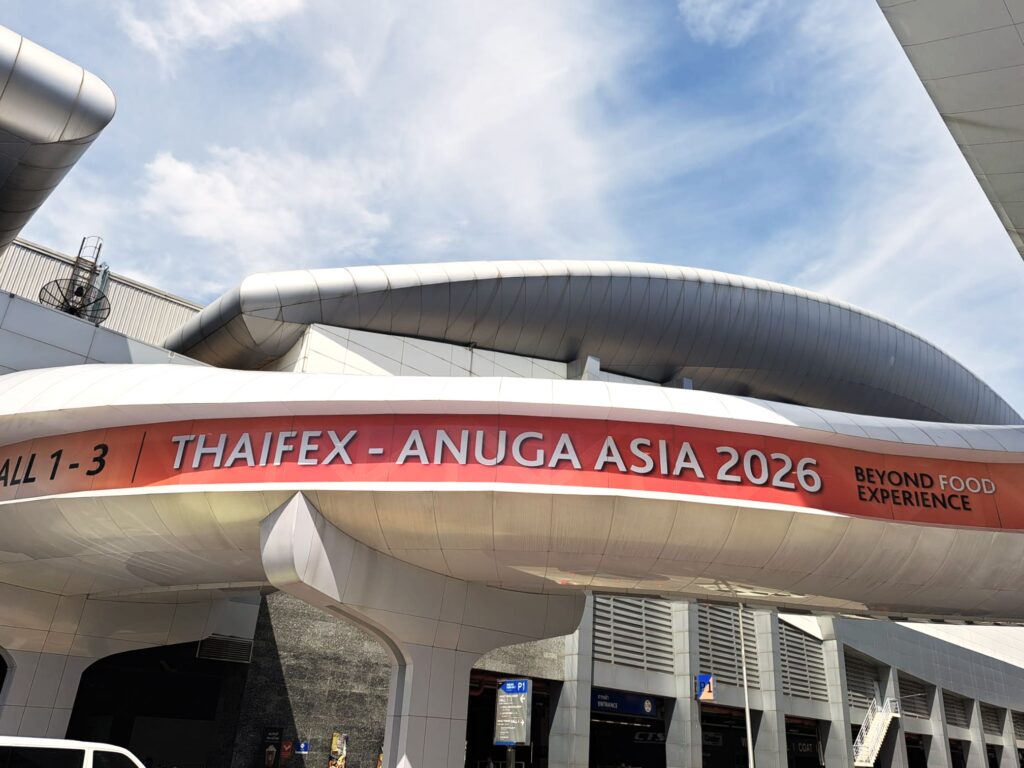
Reading those signals, Alifood decided to test the region in person, joining THAIFEX – Anuga Asia 2026 in Bangkok from 26 to 30 May. The choice was deliberate. Asia’s biggest food and beverage exhibition staged its largest edition yet this year, gathering more than 3,300 exhibitors from over 60 countries and roughly 88,000 professional buyers from 140 markets in the halls of IMPACT Muang Thong Thani. For a company whose history has been written largely in Japan and Korea, it meant stepping onto less familiar ground.
That unfamiliarity was precisely the point. Across almost thirty years, Alifood has refined a single craft: connecting carefully selected Italian producers with international buyers, then carrying the relationship through every stage of sourcing, logistics and delivery. Thaifex offered a chance to apply that craft in a setting at once smaller in scale than Tokyo or Seoul and enormous in long-term potential. ASEAN is best pictured not as one uniform market but as a cluster of distinct economies — Thai, Vietnamese, Indonesian, Filipino, Singaporean — each accelerating at its own pace and each cultivating a new class of demanding, quality-minded shoppers.
The week in Bangkok rewarded the bet. Conversations with counterparts from Thailand, Vietnam, Indonesia, the Philippines and Singapore revealed appetite not only for the products on show but, just as importantly, for the way Alifood operates alongside its clients. The team flew home with a notebook of fresh contacts, a pipeline of credible leads, and the conviction that this corner of Asia deserves the same diligence the company reserves for its longest-standing Far East relationships.
Seen from Genova, the lesson is more about strategy than about a single trade fair. ASEAN need not displace Japan and Korea; it can sit beside them, widening the base on which Alifood’s expansion in the East ultimately rests. Thaifex 2026, in other words, was never meant to be an arrival point. It was a starting line — the first visible move in a deliberate effort to spread its presence across more markets while building durable, long-term growth.
The wider picture is hard to miss. As the region’s kitchens grow more adventurous and its buyers more confident, the space for authentic Italian excellence keeps widening. The question is no longer whether the demand exists, but who will be ready to meet it. Alifood intends to be among the first to answer.