



Tuttofood 2026 and the shift toward more strategic international exhibitions
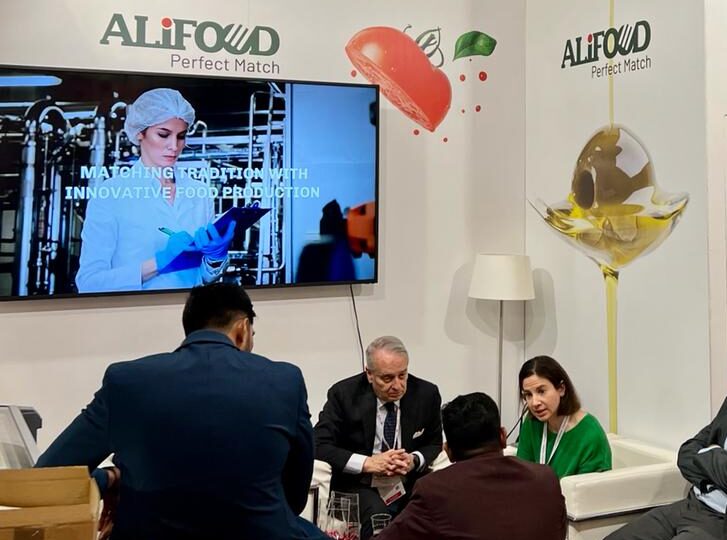
With just a few days to go before Tuttofood Milano opens its doors in Milan, the entire food industry is preparing once again to meet, exchange ideas, and explore new business opportunities.
For us, trade fairs have always represented much more than a simple showcase. They are moments where relationships are strengthened, markets are observed up close, and future strategies begin to take shape.
Over the past few years, working every day alongside Italian producers and international buyers, we have witnessed a profound transformation in the role of trade fairs within the food industry.
For a long time, the logic seemed straightforward: simply be present. Participating in major international exhibitions appeared almost mandatory. The larger the event, the greater the perceived opportunity. However, experience has taught us that quantity does not always translate into quality.
Being present at an event with tens of thousands of visitors certainly guarantees visibility. But how many of those attendees are truly relevant business counterparts? How many meetings actually evolve into concrete relationships or real commercial projects?
Today’s market requires a different approach — one that is more selective, more conscious, and more strategic.
Through our work, we have learned that not all trade fairs offer the same value, and above all, not all serve the same purpose. Major international events such as SIAL, Anuga, Foodex, or Fancy Food Show still represent key milestones in the industry, but their role has evolved. For us, they are now primarily valuable opportunities to strengthen existing relationships, meet long-standing partners, exchange insights with the market, and closely observe competitive dynamics.
Alongside these global exhibitions, there are also more vertical or geographically focused trade fairs — often less visible, yet extremely effective. Events such as THAIFEX, FHA Singapore, or Saudi Food Show allow us to connect with highly targeted professionals who attend with clear objectives and concrete business needs. In these environments, the number of visitors matters far less than the quality of the conversations.
Among European exhibitions, Tuttofood Milano holds a particularly important position for us. Over the years, it has established itself as a trade fair capable of attracting professionals genuinely interested in doing business. Buyers, distributors, and industry operators arrive well-prepared, with precise requests and a clear understanding of what they are looking for. Often, just a few minutes of well-structured discussion are enough to open commercial opportunities that would otherwise require months of remote conversations.
This shift has also led us at Alifood to rethink our own approach. Working with an international network of more than 120 producers across 19 markets, we have learned to plan our trade fair presence in a far more targeted way. In established markets, we select events that help reinforce existing relationships. In expanding markets, on the other hand, we focus our energy and investments on more specialized exhibitions, where we can meet the right decision-makers and work more effectively.
But perhaps the most important lesson is another one entirely: the real difference is not made by the trade fair itself. It is made by preparation.
Every truly productive event begins months before the doors open. It means studying the market, selecting the right contacts to meet, scheduling appointments, preparing effective materials, and arriving with clear objectives. And it continues immediately afterward, through timely, personalized, and concrete follow-up activities.
Without this groundwork, even the best trade fair risks becoming little more than a simple presence. With the right method, however, it becomes a genuine tool for growth.
We believe trade fairs have not lost value. On the contrary, today they can be even more effective than before — provided they are approached with clarity and strategic vision. They are no longer events to attend out of habit, but opportunities to be selected carefully and integrated into a coherent international growth strategy.
Those who continue to participate simply for the sake of being there will likely waste resources. Those who understand where to go, why to go, and how to work effectively within those environments will continue building sustainable results over time.
And that is exactly how, at Alifood, we choose to operate every day.